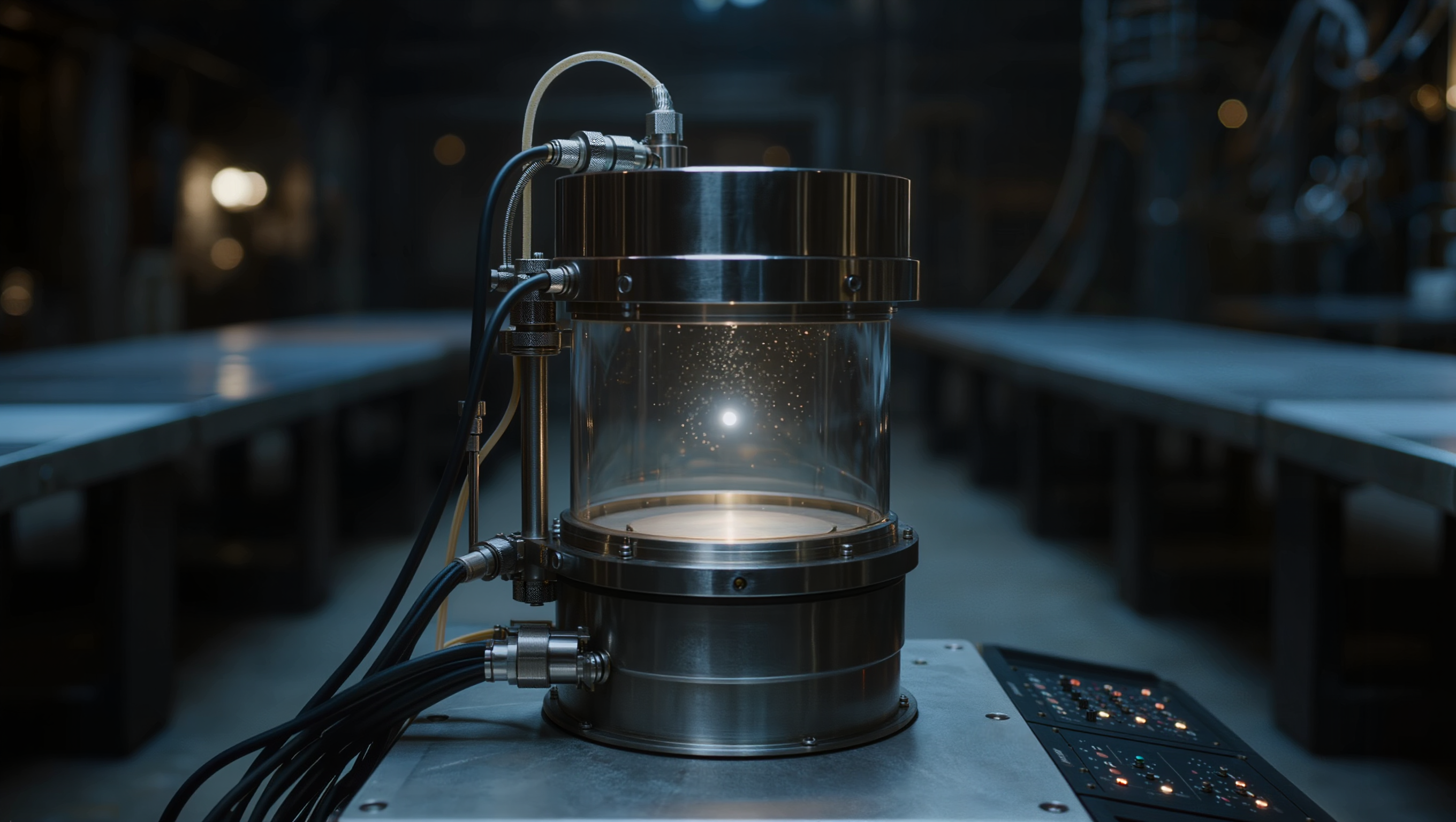
ProtoDynamics — materials engineered at the grain boundary

Put the atoms where you choose.

A grain boundary either passes electrons, Cooper pairs and ions, or stops them dead, and that gets settled while the material is still being grown. Almost nobody controls it.

Scroll

Two problems, one capability

Today, and what comes after

On the floor now

Wires stop behaving like wires below twenty nanometers. Two wafers off one recipe do not perform the same. One cell fails and takes the pack with it.

Every one of those is settled at the boundaries inside a material, while it is still growing.

The work today →

What follows

Smaller has carried the industry for fifty years and it is running out. What comes next needs materials nobody can buy yet: a solid electrolyte that survives manufacturing, a computer that reads a single proton, a machine whose answer can be checked instead of believed.

Same capability. Both problems.

What comes after →   All six →

Materials & deposition · the moat

Built to grow it right the first time

Designed for single-domain films on the tools a fab already runs.

LabForge — one product of the company

Grow it right, on the tools you already run

LabForge computes the deposition recipe up front, aimed at a single-domain result on conventional PVD / CVD / ALD / MBE tooling. The pilot walks into the lab with one prediction and one falsifiable test, not a screening matrix and a year of runs. Every value is tagged by how it was grounded, so you see what's anchored to the literature versus derived.

Grounded
Reconciled to the published record
Honest
Every value provenance-tagged
Falsifiable
One prediction, one bench test
Method
Function-first, chemistry-agnostic
Tooling
Conventional PVD / CVD / ALD / MBE
Range
General materials, one engine

Materials · thin film

Placed, not scattered

Every element put where it was meant to go, instead of wherever the statistics drop it.

Grain boundaries, by design

Thin films, placed not scattered

Ordinary deposition is a statistical scatter — atoms land where they land, and the structure you get is whatever the statistics gave you. That is why performance varies spool to spool, wafer to wafer, and why a process that works on one tool transfers badly to the next. A deposition process developed for this problem, patent pending, is designed to put every element where it is meant to go. The target is single-domain thin film, grown right on the first pass, on the conventional vacuum tooling a fab already runs.

Regime
Thin film
Placement
By design, not by chance
Process
Developed for this problem, patent pending
Structure target
Single-domain, first pass
Tooling
Conventional PVD · CVD · ALD · MBE · PLD
Scope
One capability, any element

Energy & safety

Built to contain a thermal event

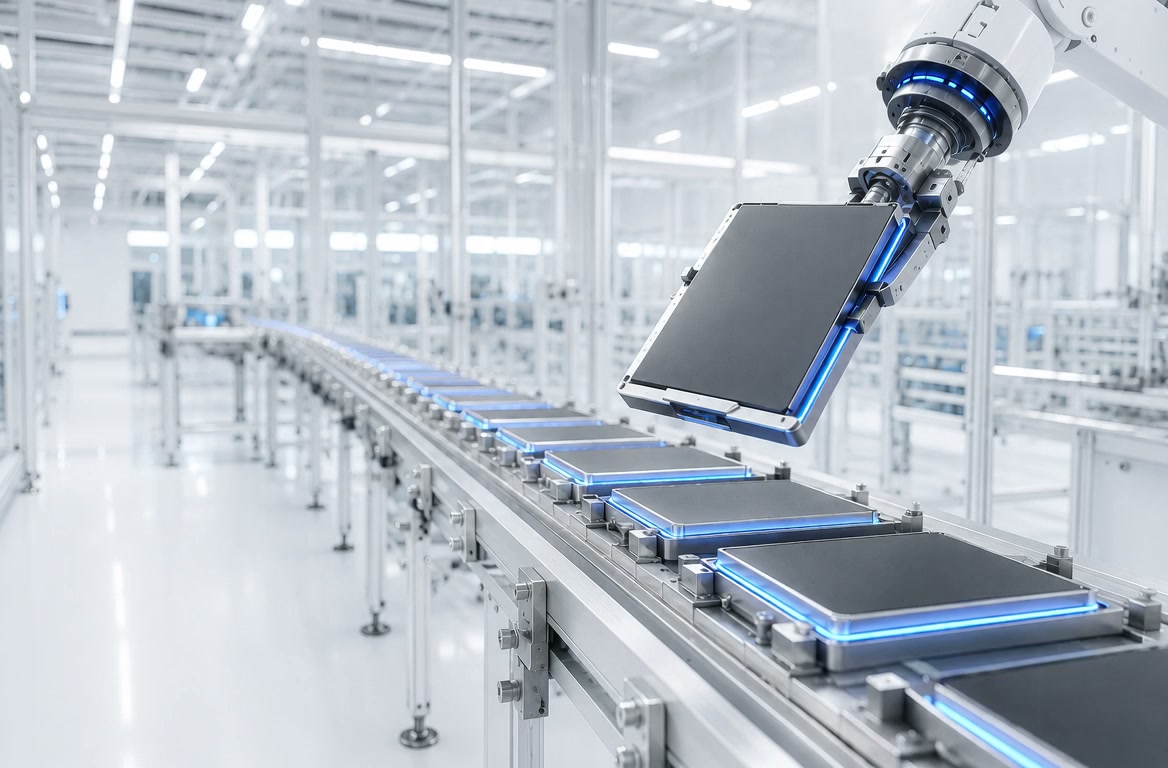
One cell fails, and the design goal is that it stays one cell.

Battery safety · containment

One cell fails. The design goal is that it stays one cell.

Thermal runaway in a lithium cell is survivable. Propagation is what is not: the failure moves to the neighboring cells, and the pack goes with it. It is designed to contain the event at the source so it does not cascade to its neighbors — cylindrical, prismatic, or pouch, at the pack level.

Problem
Cell-to-cell propagation
Fit
Cell-format-agnostic
Formats
Cylindrical · prismatic · pouch
Response
Passive, at the source
Design goal
Contained, no cascade
Scope
Pack-level safety

Energy storage · solid-state

The chemistry and the process, together

A solid electrolyte and the method of manufacture, specified together.

Solid-state battery · a complete process

Solid-state, and designed to be manufactured

A solid-state electrolyte and the process to make it, developed together — no liquid, no separator. No cell has been built and no cell has been cycled — what is claimed is the electrolyte system and the method, distinct from the safety line and standing on its own.

Electrolyte
Solid-state — no liquid
Safety
Non-flammable by design
Process
Designed for end-to-end manufacture
Form
Any cell format
Standing
Its own category
Status
Specified and filed; no cell built yet

Quantum

A data center of protons

Each unit holds a single proton and reads it directly — nothing to collapse, no decoherence. Scaled like server racks, a wall at a time.

Macroscopic Harmonic Interferometer

A wall of protons, read directly

Each unit holds a single proton in a magnetic trap and reads it directly — a stable, continuous signal, with no fragile state to collapse and no decoherence to fight. Stack them and it scales the way a data center does: add units, add output. A wall of them, read in parallel — and the only speed limit is the recorder, not the physics. What comes out is binary. It runs a conventional operating system and takes a conventional keyboard, mouse and monitor — a computer you use, not an experiment you interpret.

Unit
One proton, magnetically trapped
Readout
Read directly, every cycle
Decoherence
None — nothing to collapse
Output
Binary — no translation layer
Software
Runs a conventional OS
Interface
Standard keyboard, mouse, monitor
Scale
An array — a wall at a time
Speed
Set by the recorder, not the physics

First-principles governance

Verified, not trusted

A first-principles floor every AI decision clears before it's trusted as ground truth.

First-principles governance · the decision floor

Verified before it's trusted

The engine sits between an AI model and whatever acts on its output — an actuator, a payment, a generated spec — verifying each decision against something fixed that cannot be authored, before it's trusted as ground truth. Probabilistic to decide; first-principles to act. It isn't a demo: two products already run on it — LabForge, computing equipment-ready material specifications, and chargebackdefense.us, adjudicating live payment disputes.

Principle
Verified, not trusted
Basis
Checked against a fixed floor
Where
Between the model and the action
Act
First-principles, before it's ground truth
Scope
Financial, physical, or generated
Roadmap
Software today, silicon next

The portfolio

One root capability. Seven outputs.

The public deck explains the market logic. The protected room holds the filing register, test protocols, and diligence records. This map shows how the work is organized without exposing protected implementation details.

01

Foundation · materials

Deposition Method

The protected foundation. It is the first build because the downstream battery, safety, quantum, and software claims depend on controlling the material state before the part exists.

Patent pending · request access →

The portfolio is not seven unrelated ideas. The deposition method is the root. The rest are product wedges, instruments, or software surfaces that sit downstream of that root capability.

Commercial inquiry

Contact ProtoDynamics

Investors, national-lab directors, and hardware teams evaluating validation, licensing, or commercial fit — send the right contact point and problem.